EDDM (Every Door Direct Mail) is a USPS program that lets businesses send advertising mail to every address in a zip code or carrier route, without needing names or individual addresses. It's the mail marked 'ECRWSS' or 'Postal Customer' that you cannot opt out of.
What is EDDM (Every Door Direct Mail)?
Every Door Direct Mail (EDDM) is a United States Postal Service program launched in 2011 that allows businesses to send advertising mail to every residential and business address along specific postal carrier routes. The program was designed to make direct mail advertising more accessible and affordable for small businesses.
How Does EDDM Work?
Unlike traditional direct mail, EDDM doesn't require advertisers to purchase mailing lists or know individual recipient names. This is the critical difference: there is no mailing list to opt out of. If you have a mailbox, you receive EDDM mail. Period. Businesses simply:
- Select zip codes or carrier routes they want to target
- Print mail pieces that meet USPS size requirements (typically larger than standard letters)
- Bundle the pieces and deliver them to their local post office
- Pay discounted postage rates (approximately $0.20-0.23 per piece), far cheaper than regular postage
The USPS then delivers one piece to every address on the selected routes, whether the resident wants it or not. At under 25 cents per piece, EDDM is incredibly affordable for advertisers, which explains why billions of pieces flood American mailboxes each year.
What Does ECRWSS Mean?
ECRWSS stands for Enhanced Carrier Route Walking Sequence Saturation. This postal code indicates that the mail piece is:
- Part of a saturation mailing (delivered to every address on a route)
- Pre-sorted in the order the carrier walks their route
- Eligible for the lowest bulk mail rates
When you see "ECRWSS" or "ECRWSS EDDM" printed on mail, it confirms that the piece was sent through the EDDM program to every address in your area.
Why Does My Mail Say "Postal Customer"?
EDDM mail is typically addressed to generic terms rather than your name:
- "Postal Customer"
- "Resident"
- "Current Resident"
- "Local Postal Customer"
This generic addressing is the key reason you cannot refuse or return EDDM mail. Since it's not technically addressed to you as an individual, the USPS considers it "unaddressed mail" and will not accept a refusal.
The Scale of the Problem
The USPS processes approximately ~3 Billion EDDM mail pieces annually. When combined with other bulk mail programs, Americans receive over 80 billion pieces of advertising mail each year, the majority of which goes directly into the recycling bin or trash.
Why Was EDDM Created?
The USPS launched EDDM in 2011 primarily for two reasons:
- Revenue generation: As first-class mail volume declined due to digital communication, the USPS needed new revenue streams. Advertising mail now represents a significant portion of postal revenue.
- Small business accessibility: Traditional direct mail required purchasing mailing lists and managing complex postal regulations. EDDM simplified this for local businesses like restaurants, dentists, and real estate agents.
The Consumer Perspective
While EDDM may benefit some small businesses, it creates significant problems for consumers:
- No consent required: Your address is included automatically; you have no say in whether you receive this mail
- No opt-out mechanism: Unlike email or phone marketing, there is no registry or preference service for EDDM
- Environmental waste: Most EDDM mail is discarded immediately, contributing to paper waste
- Time cost: Sorting through unwanted mail takes time from busy households
Examples of Problematic EDDM Content
EDDM allows virtually any content to be delivered to every home on a postal route, including materials many recipients find objectionable:
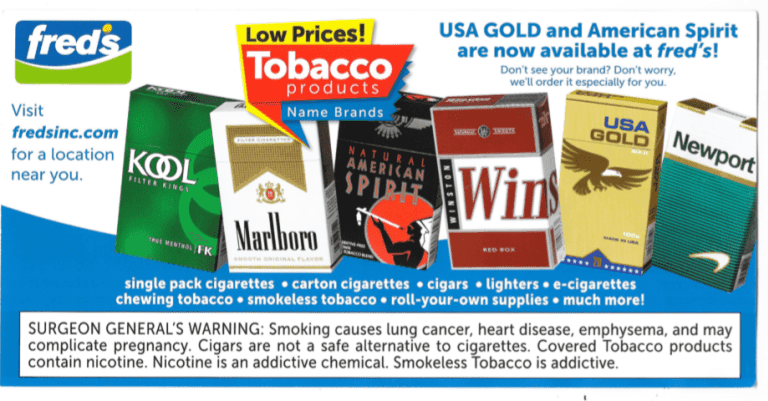
Tobacco advertising delivered to every home, including families with children

Religious materials delivered to all addresses regardless of recipient beliefs
Analysis
Does EDDM Actually Keep the USPS Afloat?
The standard defense of Every Door Direct Mail goes like this: the Postal Service is losing billions, so it cannot afford to let households opt out of the program. The math does not support the claim.
USPS Postal Facts reports that EDDM has delivered more than 33 billion pieces and generated more than $5 billion in revenue since launching in 2011. Averaged over fourteen years, that works out to roughly $360 million a year.
Compare that to the rest of the USPS balance sheet. The agency closed fiscal year 2025 with a $9 billion net loss and total operating revenue near $80 billion (USPS Newsroom, November 2025). The U.S. GAO estimates cumulative USPS losses of about $109 billion since 2007. EDDM revenue is about four percent of a single year's loss and less than half a percent of total revenue.
The math at a glance
- EDDM revenue ≈ $360M / year
- USPS total operating revenue (FY2025) ≈ $80B
- USPS net loss (FY2025) ≈ $9B
- EDDM as share of total revenue: ~0.45%
- EDDM as share of one year's loss: ~4%
The bigger levers are obvious. When USPS suspended pension contributions for FY2026, it freed up $2.5 billion in a single year (Reuters, April 2026), nearly seven times the annual EDDM take. Rate hikes on Marketing Mail in FY2025 alone produced $350 million in new revenue, almost matching what EDDM brings in overall. When Postmaster General David Steiner told Congress the agency was running out of money (NPR, March 2026), the fixes he floated were reducing delivery days, raising first-class postage toward a dollar, and expanding borrowing authority. He did not mention EDDM. It is not large enough to matter at that scale.
EDDM's real function is not to save the Postal Service. It is a politically protected program that supports a small-business advertising industry and props up declining Marketing Mail volume statistics. That is a reasonable thing for USPS to do, but it is not a reason to deny 128 million American households a choice about what lands in their mailbox.
Sources: USPS Postal Facts, USPS Newsroom FY2025, U.S. GAO, Reuters, NPR. Last updated April 2026.
Frequently Asked Questions
What does ECRWSS mean on my mail?
ECRWSS stands for 'Enhanced Carrier Route Walking Sequence Saturation.' It means the mail piece is being delivered to every address on a postal carrier's route. This is the technical designation for EDDM saturation mail. You may also see variations like ECRWSS EDDM, ECRLOT (Line of Travel), or ECRWSH (High-Density).
Why does my mail say 'Postal Customer' instead of my name?
Mail addressed to 'Postal Customer,' 'Resident,' 'Current Resident,' or 'Current Occupant' is EDDM saturation mail. Advertisers don't need your name or address, they simply pay to have mail delivered to every home in a zip code or carrier route. This generic addressing is why you cannot refuse or return this mail.
How much does EDDM cost advertisers?
EDDM postage rates are heavily discounted, typically around $0.20-0.25 per piece, far less than regular first-class mail. This low cost incentivizes mass mailings and makes saturation advertising economically attractive for local businesses.
Can I opt out of EDDM mail?
No. There is currently no legal mechanism to opt out of EDDM or saturation mail in the United States. Unlike spam email or robocalls, postal advertising has no federal opt-out registry. Services like DMAchoice and CatalogChoice only work for addressed mail, not EDDM.
Can I refuse EDDM mail or return it to sender?
No. You can only refuse mail addressed to you personally. Since EDDM mail is addressed to 'Postal Customer' rather than your name, the USPS does not accept refusals. Writing 'Refused' or 'Return to Sender' will have no effect.
What is the difference between EDDM and regular junk mail?
Regular addressed junk mail uses your name and address from mailing lists, you can opt out by removing yourself from these lists. EDDM requires no mailing list at all, it's delivered to every address on a route. There's no list to remove yourself from, which is why EDDM cannot be stopped.
How many EDDM pieces are sent each year?
The USPS processes approximately 3 billion EDDM mail pieces annually. When combined with other advertising mail programs, Americans receive over 80 billion pieces of marketing mail each year, the majority of which goes directly to recycling or trash.
Does EDDM revenue save the USPS from its financial crisis?
No. USPS Postal Facts reports EDDM has generated more than $5 billion since 2011, which averages to roughly $360 million a year. That is about 0.45% of the USPS's $80 billion in annual operating revenue and only 4% of the $9 billion net loss in fiscal year 2025. When Postmaster General David Steiner outlined fixes to Congress in March 2026, he cited reducing delivery days, raising first-class postage, and expanding borrowing authority. He did not mention EDDM. The program is too small to meaningfully affect USPS solvency, which undercuts the claim that consumers cannot opt out because the Postal Service needs the revenue.
Learn More
Ready to take action?
Sign the petition to demand opt-out rights for USPS advertising mail.