You cannot opt out of EDDM mail because: (1) federal law gives USPS exclusive access to your mailbox, (2) the mail is addressed to 'Postal Customer' not you personally, and (3) there is no Do Not Mail registry. The USPS has no incentive to create one because advertising mail generates billions in revenue.
Why You Can't Opt Out of USPS Junk Mail
Unlike spam email, robocalls, or text message marketing, all of which have federal opt-out mechanisms, there is no legal way to stop USPS advertising mail from arriving in your mailbox. This isn't an oversight; it's by design.
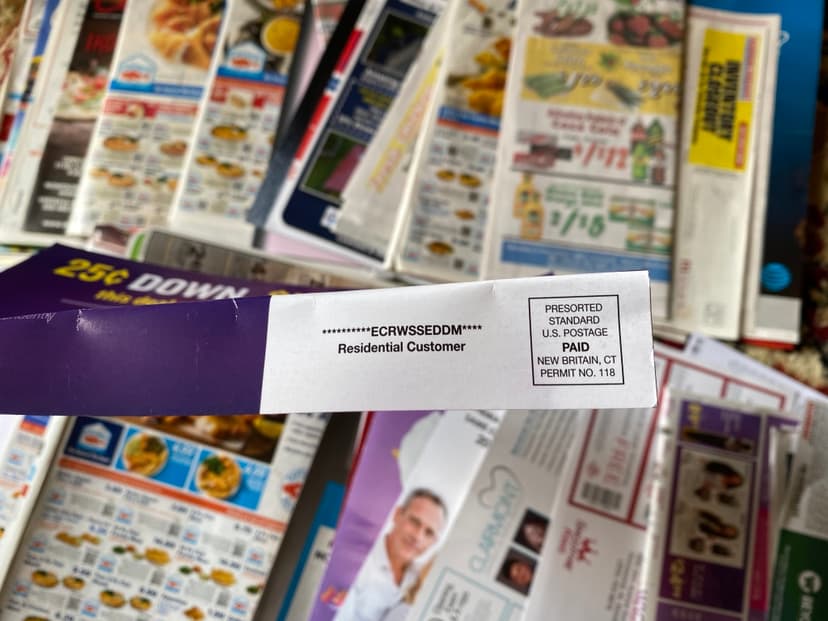
EDDM mail addressed to "Postal Customer", not you personally
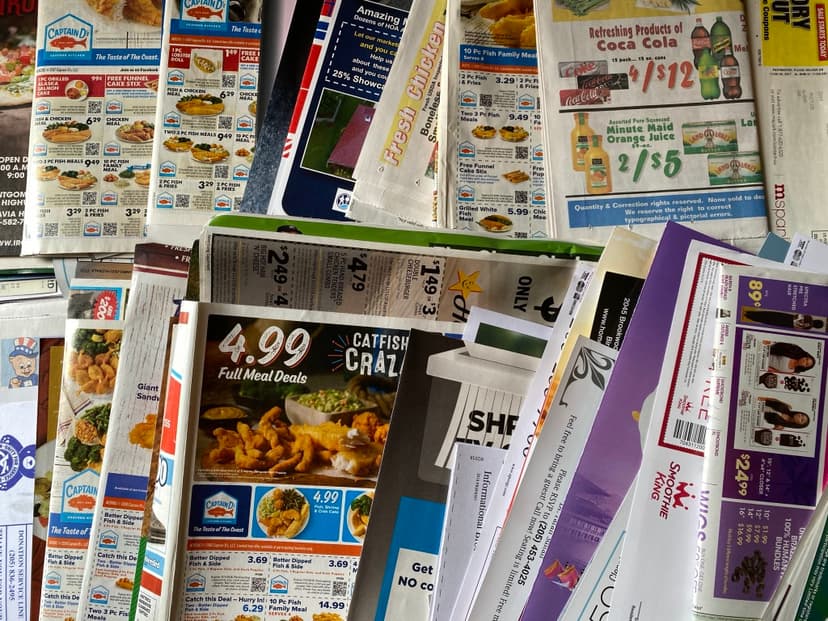
The ECRWSS label indicates saturation mail delivery
The Federal Mailbox Monopoly
Under federal law (18 U.S.C. § 1725), your mailbox is legally reserved for the exclusive use of the United States Postal Service. While you own the physical mailbox, only the USPS and its carriers are legally permitted to place items inside it.
This "mailbox monopoly" means:
- Only USPS can use your mailbox (violating this is a federal offense)
- The USPS has complete discretion over what gets delivered
- You cannot legally prevent any mail the USPS chooses to deliver
The mailbox monopoly was originally intended to protect mail security and postal revenue. However, it now means you have no control over the advertising that fills your mailbox daily.
The "Postal Customer" Loophole
Traditional mail can be refused: you can write "REFUSED" on an envelope and return it to your carrier. However, this only works for mail that is addressed to you personally.
EDDM mail exploits a critical loophole:
- It's addressed to "Postal Customer," "Resident," or "Current Occupant"
- Since it's not addressed to you, it's not legally "your" mail
- You cannot refuse mail that isn't addressed to you
- Carriers are instructed to deliver it regardless of objections
This is not an accidental loophole, it's an intentional feature of the EDDM program design.
No Do Not Mail Registry Exists
The federal government has created consumer protection registries for other marketing channels:
- Do Not Call Registry (2003): Covers phone marketing
- CAN-SPAM Act (2003): Requires email opt-out mechanisms
- TCPA (1991): Restricts text message marketing
Yet no equivalent protection exists for postal mail. In 2007-2008, 18 states introduced "Do Not Mail" bills to create state-level opt-out registries: Arkansas, Colorado, Connecticut, Hawaii, Illinois, Maryland, Michigan, Missouri, Montana, New Hampshire, New Jersey, New York, North Carolina, Rhode Island, Tennessee, Texas, Vermont, and Washington. Every single bill was withdrawn or defeated after intense industry opposition.
Follow the Money: USPS Revenue Dependency
The USPS is not taxpayer-funded, it must generate its own revenue primarily through postage. As first-class mail volume has declined due to email and digital payments, advertising mail has become increasingly important:
- Marketing mail generates billions in annual revenue for USPS
- EDDM specifically is promoted as a growth product for the Postal Service
- Any opt-out mechanism would directly reduce this revenue stream
The USPS has a fundamental conflict of interest: it is both the regulator of mail delivery and a direct beneficiary of advertising mail volume. Creating an opt-out would hurt its own bottom line.
Industry Lobbying
The direct mail industry is a powerful lobbying force. In 2007, when state-level Do Not Mail bills gained momentum, the Data & Marketing Association formed the Mail Moves America (MMA) coalition to fight the legislation. Their arguments:
- Job losses for mail carriers and postal workers
- Devastating effects on retailers, printers, and manufacturers
- Increased postal rates for all consumers
- Small businesses depend on EDDM for local advertising
The campaign was remarkably effective. All 18 state bills were withdrawn, and no federal legislation has gained traction since. Meanwhile, the industry continues to lobby against any consumer opt-out mechanism.
What About Rowan v. Post Office?
You may have heard of the 1970 Supreme Court case Rowan v. United States Post Office Department, which allows individuals to block mail from specific senders. However, this law:
- Only applies to mail you personally find "erotically arousing or sexually provocative"
- Requires you to file paperwork for each individual sender
- Has been interpreted narrowly by the USPS
- Does not apply to EDDM or general advertising mail
Rowan is occasionally cited as a solution, but it is not a practical mechanism for stopping unwanted advertising.
The DMAchoice Myth
The direct mail industry offers a service called DMAchoice that allows you to opt out of addressed mail from participating companies. However:
- It only affects addressed mail from companies that voluntarily participate
- It has zero effect on EDDM or any saturation mail
- Many major mailers do not participate
- It requires you to register and renew periodically
DMAchoice is often promoted as a solution when it demonstrably is not. It does nothing to address the core problem of saturation advertising mail.
Other Countries Have Solved This
The inability to opt out is not inevitable. Other countries have implemented effective systems:
- Netherlands: Opt-in system with "JA/JA" stickers, you only receive advertising mail if you request it. Amsterdam's implementation achieved a 30% reduction in advertising mail volume.
- Germany: "Keine Werbung" (No Advertising) stickers are legally binding
- United Kingdom: Mail Preference Service covers most unaddressed mail
These models prove that consumer choice and postal services can coexist. The US simply hasn't chosen to implement similar protections, despite 18 years of consumer advocacy efforts.
Frequently Asked Questions
Can I refuse EDDM mail at my mailbox?
No. EDDM mail is addressed to 'Postal Customer' rather than you personally, so you cannot legally refuse it. Postal carriers are instructed to deliver it regardless of any refusal attempts.
Does the DMAchoice mail preference service stop EDDM?
No. DMAchoice only affects addressed mail from companies that voluntarily participate. It has zero effect on EDDM or any saturation mail programs.
Can I put a 'No Junk Mail' sticker on my mailbox?
You can, but it has no legal effect. USPS carriers are required to deliver EDDM mail to every address and will ignore such stickers.
Why is there a Do Not Call registry but no Do Not Mail registry?
The Do Not Call registry was created by the FTC under the Telemarketing Sales Rule. No equivalent law exists for postal advertising, and the USPS, which profits from advertising mail, has no incentive to create one.
Learn More
Ready to take action?
Sign the petition to demand opt-out rights for USPS advertising mail.